Your Baltic Amber Guide
This guide explores what makes Baltic amber unique. Learn how natural amber is formed, how unheated amber differs from treated varieties, and why color, inclusions, and aging matter.
Our goal is to offer clear, honest information so you can better understand the amber you wear, collect, and gift—grounded in tradition, craftsmanship, and respect for nature.
What Is Baltic Amber?
Baltic amber is fossilized pine tree resin that formed approximately 40–60 million years ago, during the Eocene epoch. It originated in vast ancient forests that once covered parts of what is now Northern and Eastern Europe, near the Baltic Sea.
Also known as succinite, Baltic amber is classified as a gemstone and prized for its distinctive warmth, depth, and radiance—qualities that set it apart from other organic gems.
What Makes Baltic Amber Different from Other Ambers?
Amber exists in many regions of the world, but not all ambers are the same. They differ in age, composition, and properties. For example, Lebanese amber dates back over 150 million years, making it far older than Baltic amber.
What truly distinguishes Baltic amber is its chemical composition, particularly the presence of succinic acid. Baltic amber typically contains 3–8% succinic acid, while other amber resins contain significantly less—or none at all. This composition gives Baltic amber its unique character and is one of the reasons it has been valued for centuries.
Baltic amber is also unmatched in its diversity of natural colors, making it especially desirable for jewelry and collectors.
What Are the Naturally Occurring Colors of Baltic Amber?
Baltic amber occurs in a rich and varied natural color palette. The most common naturally occurring colors include:
Yellow – The classic and most prevalent amber color, warm and golden
Honey – Ranging from deep, rich tones to lighter shades, adding depth and glow
Cognac – Darker, brandy-like hues with a refined, elegant feel
Butterscotch / White – Creamy, opaque tones ranging from pale yellow to soft white
Cherry – Deep red or reddish-brown hues, rarer and highly sought after
Naturally intense blue or green amber is extremely rare. Most vivid greens seen on the market are the result of treatment or enhancement.
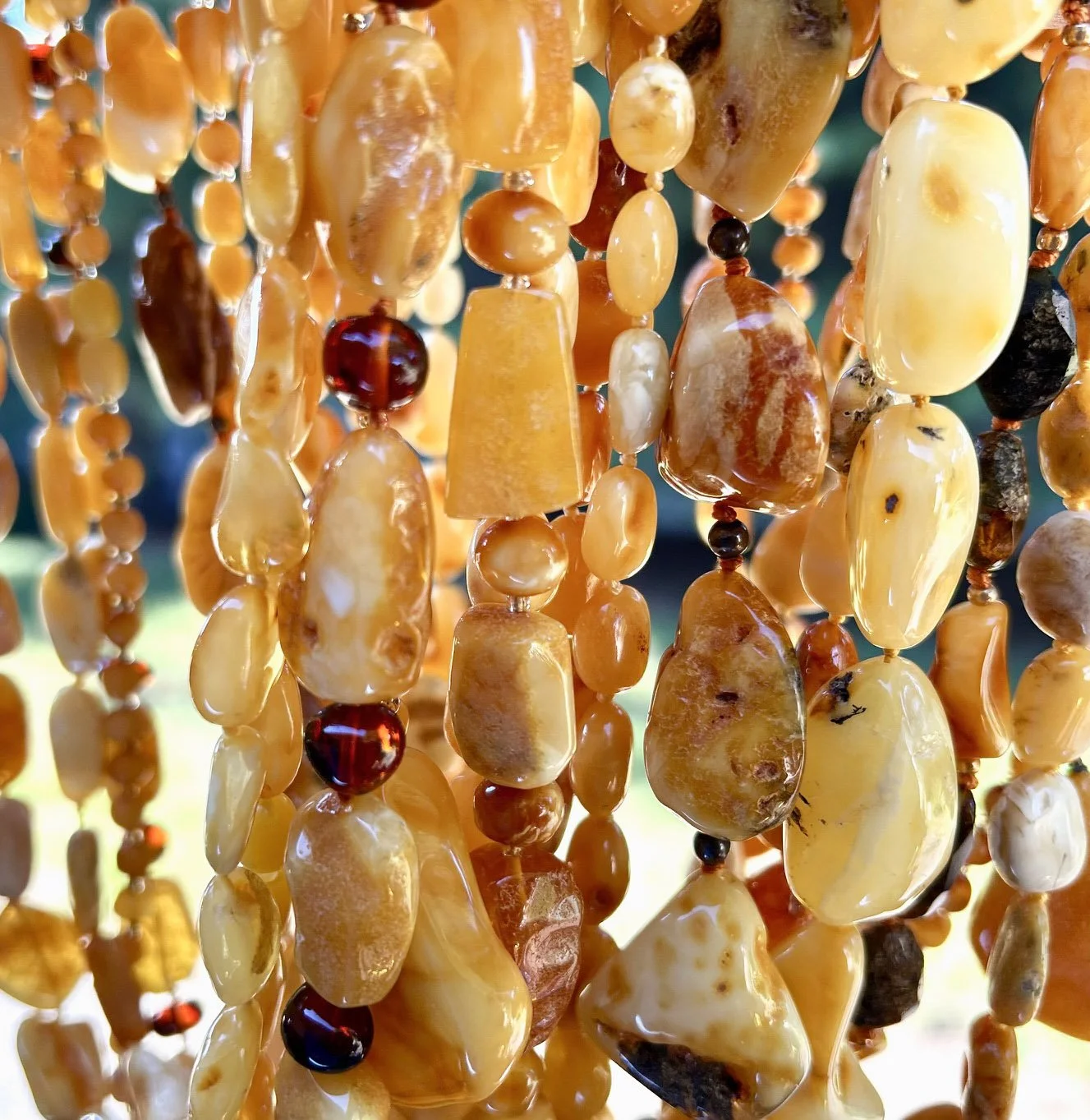
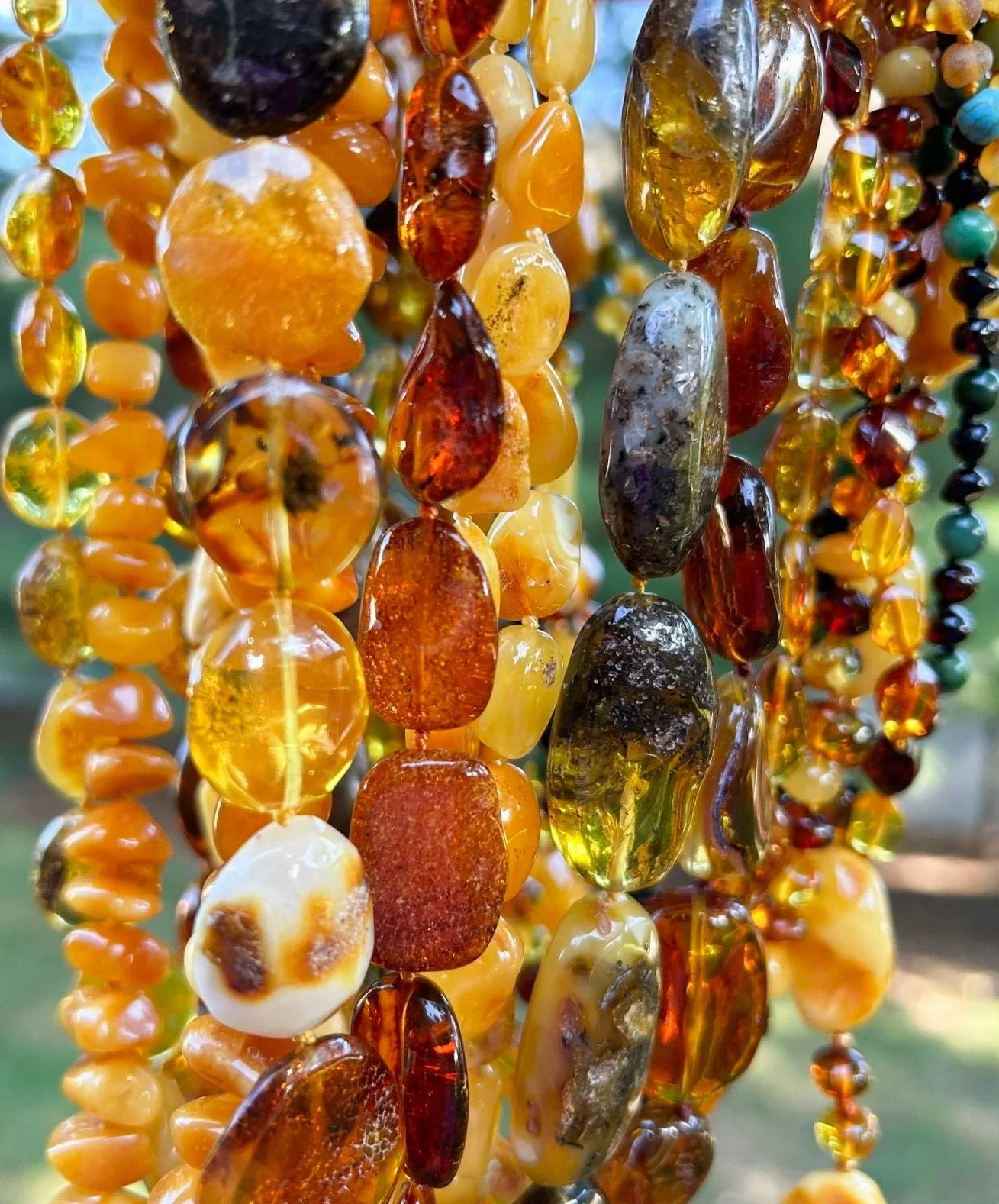
Amber often displays color variations and internal patterns, sometimes blending multiple tones within a single piece—one of the reasons no two ambers are ever truly alike.
What Determines Amber’s Color and Clarity?
Amber’s color and clarity were shaped long before human hands ever touched it. Factors influencing its appearance include:
Humidity and temperature at the time the resin flowed
The speed at which the resin hardened
The amount of air trapped or released during formation
The presence of minerals and organic matter
The condition and age of the tree
Sun exposure, seasonal cycles, and geological pressure
These variables affected not only amber’s color and transparency, but also its final form—creating the organic individuality amber is known for.
What Does “Natural” or “Unheated” Baltic Amber Mean?
The term natural amber is often used simply to mean “real.” However, according to the classification standards of the International Amber Association (IAA), the definition is much more precise.
In IAA terminology, natural (or unheated) amber refers to amber that has not been modified. It has not been heated, pressed, or clarified. Instead, it remains in the same state nature created millions of years ago—altered only through traditional processes such as cutting, grinding, polishing, drilling, or turning.
This means the glow, texture, and inclusions you see are exactly as they formed in ancient pine forests. Each piece is unique, organic, and alive with history. When you hold natural amber, you are holding a fragment of the earth’s memory.
Can Baltic Amber Change Color Over Time?
Yes. One of the most fascinating characteristics of natural, untreated amber is that it continues to evolve over time.
Through exposure to air, light, and the environment, natural amber will gradually change—most noticeably in color. White and butterscotch ambers often deepen over the years, developing warm hues of orange, red, or brown. Another natural transformation is the formation of fine surface cracks or a weathered outer layer known as amber crust.
These changes are not flaws. They are signs of age, authenticity, and natural maturation—evidence that amber is a living gemstone shaped by time.
Are There Medicinal or Healing Properties Associated with Baltic Amber?
Baltic amber has long been associated with traditional and holistic practices. Its high concentration of succinic acid is believed to have anti-inflammatory and calming properties.
When worn against the skin, amber warms naturally and is said to release trace amounts of succinic acid. Traditionally, this has been associated with easing discomfort, reducing inflammation, and promoting a sense of balance and calm.
Baltic amber exhibits natural electrostatic behavior. Through friction and warmth, it can develop a static charge—a property historically observed and sometimes described as electronegative in traditional sources. This same electrostatic effect is used in modern natural tick and flea repellents, where the static environment created by amber discourages parasites from attaching.
Culturally, Baltic amber has been associated with protection, positive transformation, grounding energy, and manifestation. While these qualities are rooted in tradition rather than modern medicine, they remain an important part of amber’s enduring appeal.
What Is the Difference Between Amber and Copal?
Amber and copal both originate from tree resin, but the key difference lies in age and degree of fossilization.
Amber is millions of years old and fully fossilized. Over time, the resin undergoes a natural process of polymerization, becoming harder, more stable, and more durable. This transformation gives amber its lasting beauty, resilience, and value.
Copal, on the other hand, is much younger—typically only hundreds to thousands of years old. It has not completed the fossilization process and remains less polymerized. As a result, copal is softer, less stable, and more reactive to heat and solvents such as acetone. It may feel slightly tacky and is more prone to surface changes over time.
Copal is sometimes referred to as “young” or “immature amber,” while amber represents the fully matured, fossilized stage of resin shaped by millions of years.
How Can You Tell If Baltic Amber Is Real?
There are many imitations on the market, including copal (a younger resin) and synthetic materials such as polyester or epoxy.
Authentic Baltic amber is:
Lightweight and feels warm to the touch
Often imperfect, with natural bubbles or inclusions
Not heavy or glassy like many fakes
The most reliable way to avoid imitations is to purchase from a trusted seller who performs proper due diligence.
Common methods used to identify real amber include:
Burn test: Amber burns with a smoky yellow flame and a resinous scent
UV light: Genuine amber fluoresces bluish or yellow-green
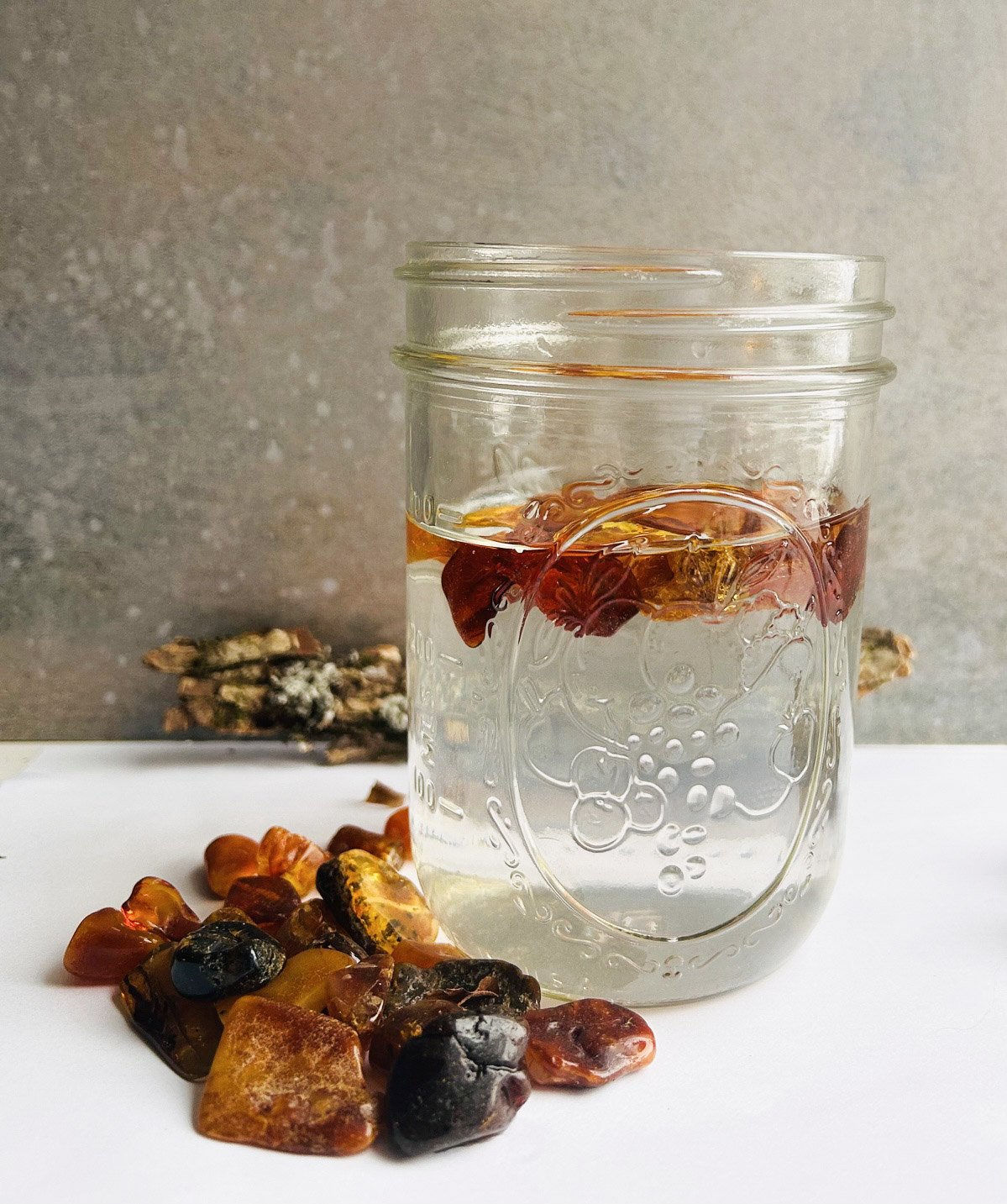
Saltwater test: Natural amber floats in heavily salted water. Salt water test has its limits - please see next question for more.
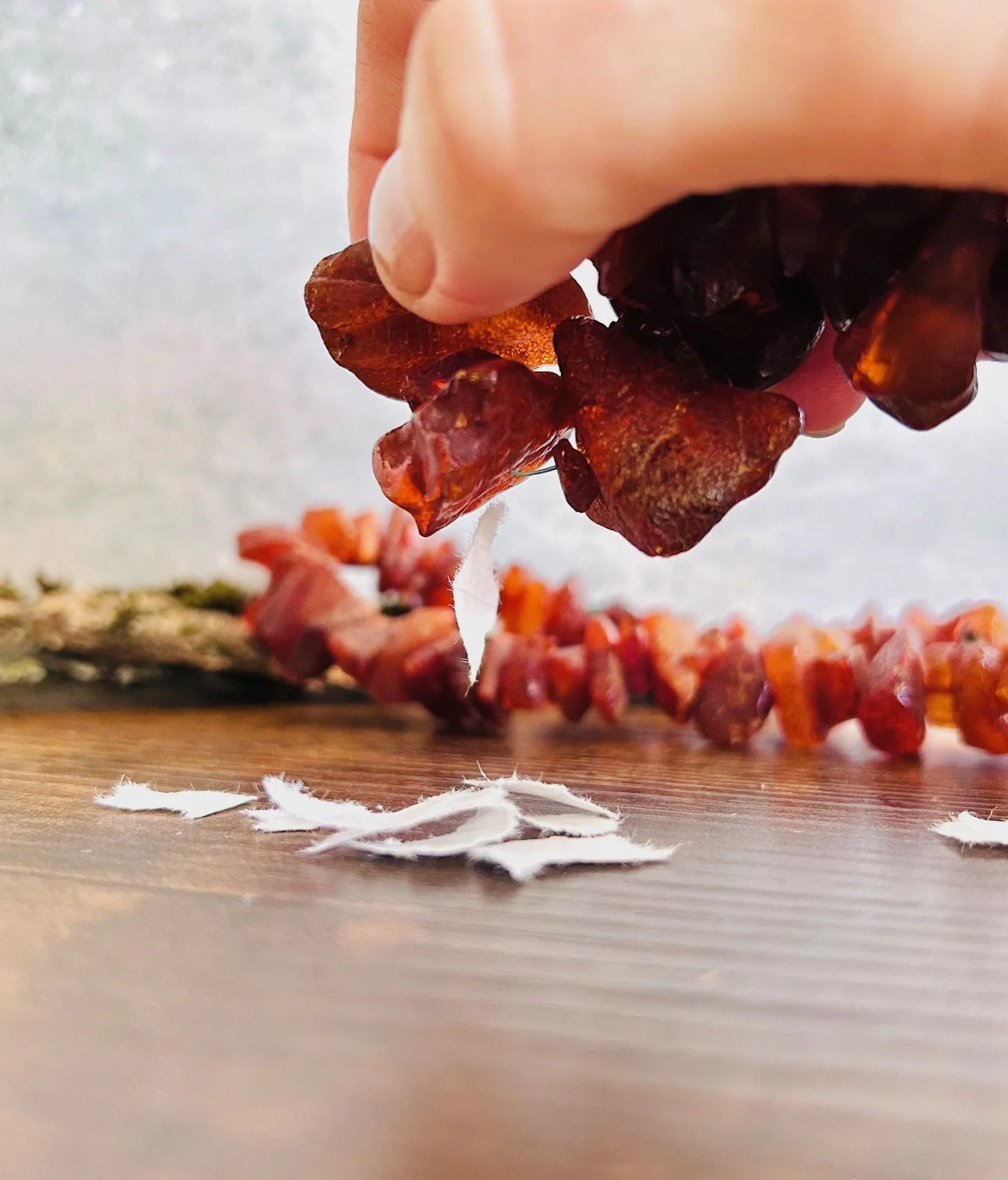
Static test: When rubbed against cloth, amber attracts small bits of paper - works best with raw, unpolished pieces. While the presence of static strongly supports that amber is natural, the absence of static does not automatically mean a piece is not amber.
In professional settings, laboratories—such as the IAA lab in Gdańsk—use density and refractive index testing, among other tests, to verify authenticity.
Why the Saltwater Test Has Limits
The saltwater test relies on amber’s naturally low density. While this property often remains intact in lightly treated amber, it can be influenced by certain modifications.
Factors that may affect how amber behaves in saltwater include heat, pressure, internal restructuring, and the presence of added materials or fillers, particularly in pressed amber.
For this reason, organizations such as the International Amber Association emphasize the importance of using multiple identification methods rather than relying on a single test. Observing amber’s structure, behavior, and provenance together provides a more reliable understanding of its nature.
Note: The saltwater test should not be performed on finished amber jewelry. Salt may lodge in cotton thread and settings, affecting the integrity of the piece and making it very hard to clean and remove.
Does Treated Amber Still Create Static Electricity?
Natural, unheated Baltic amber reliably creates static electricity when rubbed against fabric or animal fur. This electrostatic behavior is one of amber’s classic properties and has been observed for centuries.
Treated amber—such as heat-treated or clarified amber—may still produce static, but the effect is often weaker or inconsistent, depending on how much the internal structure was altered by heat or pressure. Pressed amber, made from fused amber fragments, frequently shows little to no static behavior.
For this reason, the static test works best with natural, unpolished, unheated amber. While the presence of static strongly supports that amber is natural, the absence of static does not automatically mean a piece is not amber.
How Do You Clean and Care for Amber Jewelry?
Amber is an organic gemstone and should be treated gently. Proper care will help preserve its natural beauty and allow it to age gracefully over time.
For everyday care, amber requires very little cleaning.
Gentle wipe: Use a soft, lint-free cloth to remove dust and skin oils after wearing.
Mild wash (if needed): For deeper cleaning, use lukewarm water with a drop of mild soap. Gently clean the amber with your fingers or a very soft brush (such as a baby toothbrush for crevices).
Rinse and dry: Rinse with clean, lukewarm water and immediately pat dry with a soft cloth. Do not soak or allow amber to air-dry.
What to Avoid? Amber is softer than mineral gemstones and can be damaged by heat and chemicals. Always avoid:
Hot water
Ultrasonic or steam cleaners
Alcohol, acetone, vinegar, or household cleaners
Prolonged soaking in water
Direct sunlight for extended periods
General Care & Storage:
Protect from chemicals: Remove amber jewelry before applying perfume, lotion, hairspray, or cleaning products.
Avoid heat: Take off amber jewelry before showering, swimming, sunbathing, or using saunas.
Store separately: Keep amber in a cotton or satin pouch, or a fabric-lined jewelry box, to prevent scratches and preserve the artwork.
Special Considerations:
Amber with silver: Use a silver polishing cloth only on the metal parts, avoiding contact with the amber itself.
Raw or unpolished amber: Follow the same care guidelines, focusing cleaning on the metal settings and using extra care on the stone’s surface.
What Are Amber Inclusions?
Inclusions are organic materials—such as plant matter, air bubbles, or insects—that became trapped in resin before it fossilized.
In Baltic amber, inclusions are valued not only for their rarity but for their scientific and historical significance. Each inclusion is a natural record of life from millions of years ago, preserved exactly as it was.
Not all amber contains inclusions, but when present, they contribute greatly to amber’s individuality and collectability.
Is Baltic Amber a Gemstone or a Resin?
Baltic amber is classified as a gemstone, even though it originates from fossilized tree resin. What distinguishes amber from ordinary resin is time—over millions of years, resin undergoes a natural fossilization process that stabilizes its structure and transforms it into a gem-quality material.
Because of its organic origin, amber feels warm to the touch and lightweight compared to mineral gemstones, yet it holds lasting value due to its rarity, age, and natural beauty.
What Is the Cultural Center of Baltic Amber?
The city of Gdańsk, located in northern Poland, is widely regarded as the international capital of Baltic amber. For centuries, it has been a center of amber trade, craftsmanship, and scholarship.
What Is the International Amber Association (IAA)?
Founded in 1996, the International Amber Association (IAA) is a global organization dedicated to the promotion, research, and protection of Baltic amber. It brings together scientists, artists, traders, and collectors to establish clear classification standards, verify authenticity, and promote transparency in the amber market.
The IAA operates a laboratory in Gdańsk and plays a key role in distinguishing natural, treated, and pressed amber—helping protect both artisans and consumers from misrepresentation.
Inside IAA’s Amber Laboratory—How Baltic Amber Is Verified
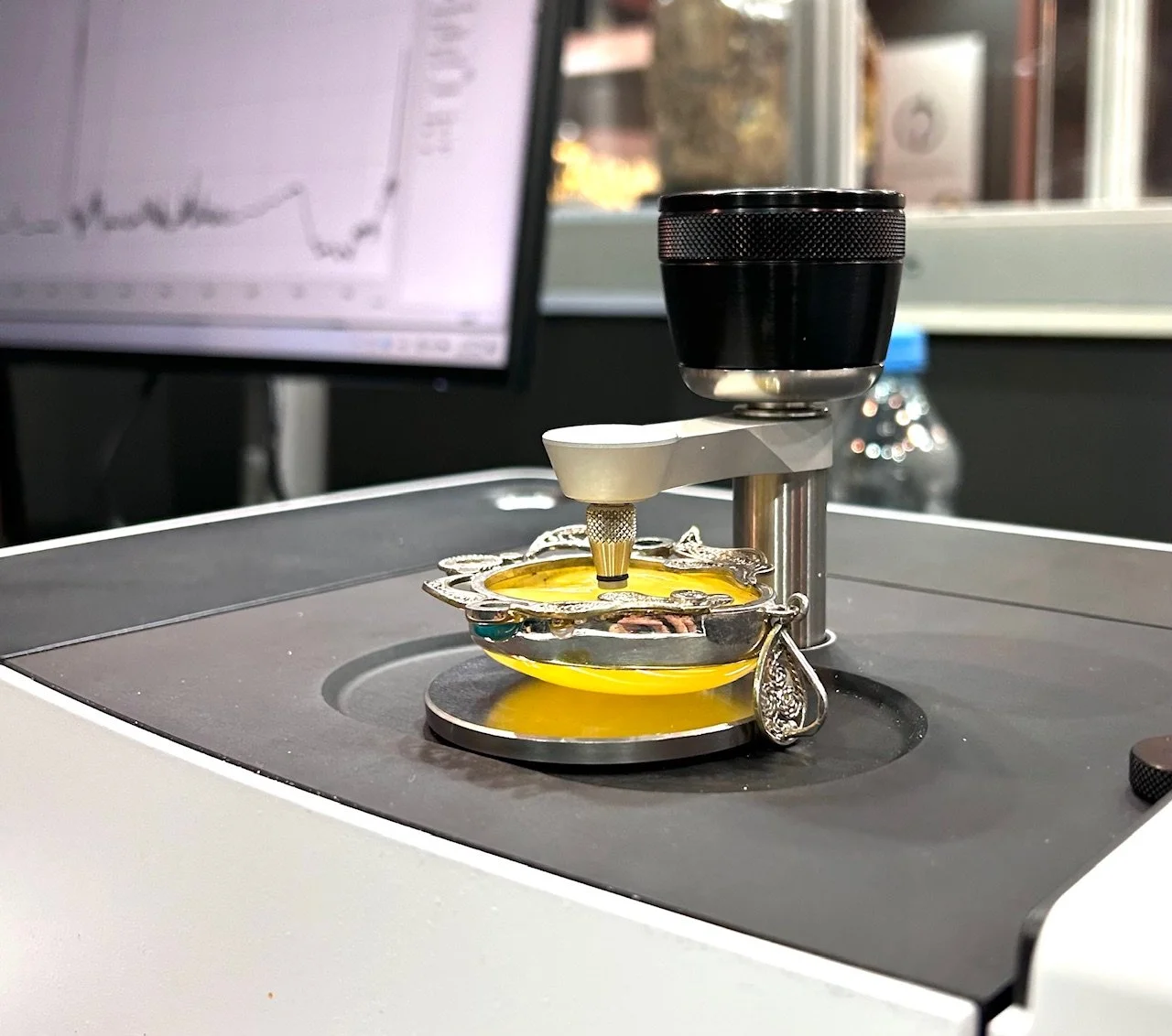
While in Gdańsk attending AMBERIF, we visited the International Amber Association (IAA) Amber Laboratory to better understand how genuine Baltic amber is tested and certified.
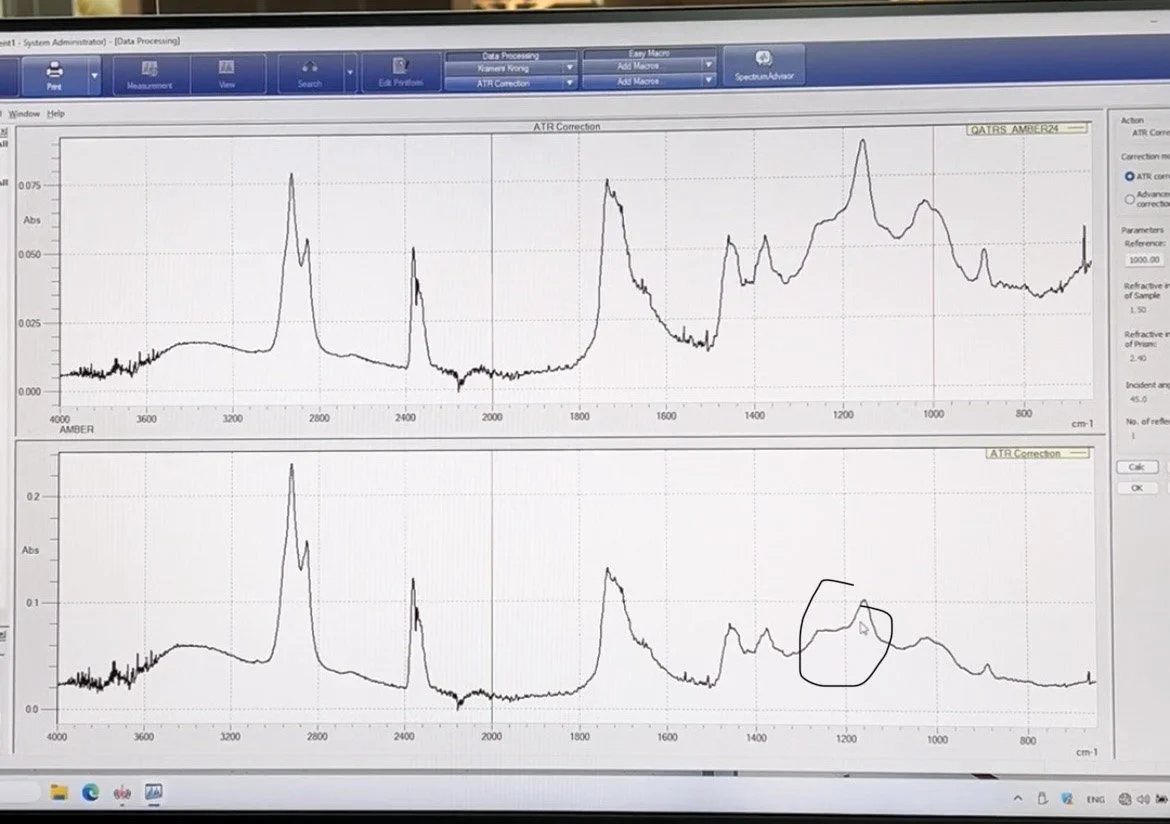
The laboratory uses advanced methods such as microscopic evaluation and infrared (FTIR) spectroscopy to analyze amber’s internal structure and chemical composition. One of the most important indicators experts look for is the “Baltic Shoulder” — a characteristic horizontal line (circled on), a signature in the spectrum that confirms the material is natural, unmodified Baltic amber.
Amber is a complex organic material composed of many different chemical groups. When exposed to infrared radiation during FTIR testing, these groups respond by vibrating in their own distinct ways — some chemical bonds contract, while others elongate. Each of these movements occurs at specific energy levels and produces a unique signal.
These signals together form a pattern across the spectrum. Scientists interpret this pattern by analyzing the full range of wave numbers, with particular attention given to the “fingerprint region” (approximately 1300–800 cm⁻¹) — a range where each substance reveals its unique chemical identity. It is this region that allows experts to confidently distinguish Baltic amber from imitations or other fossil resins.
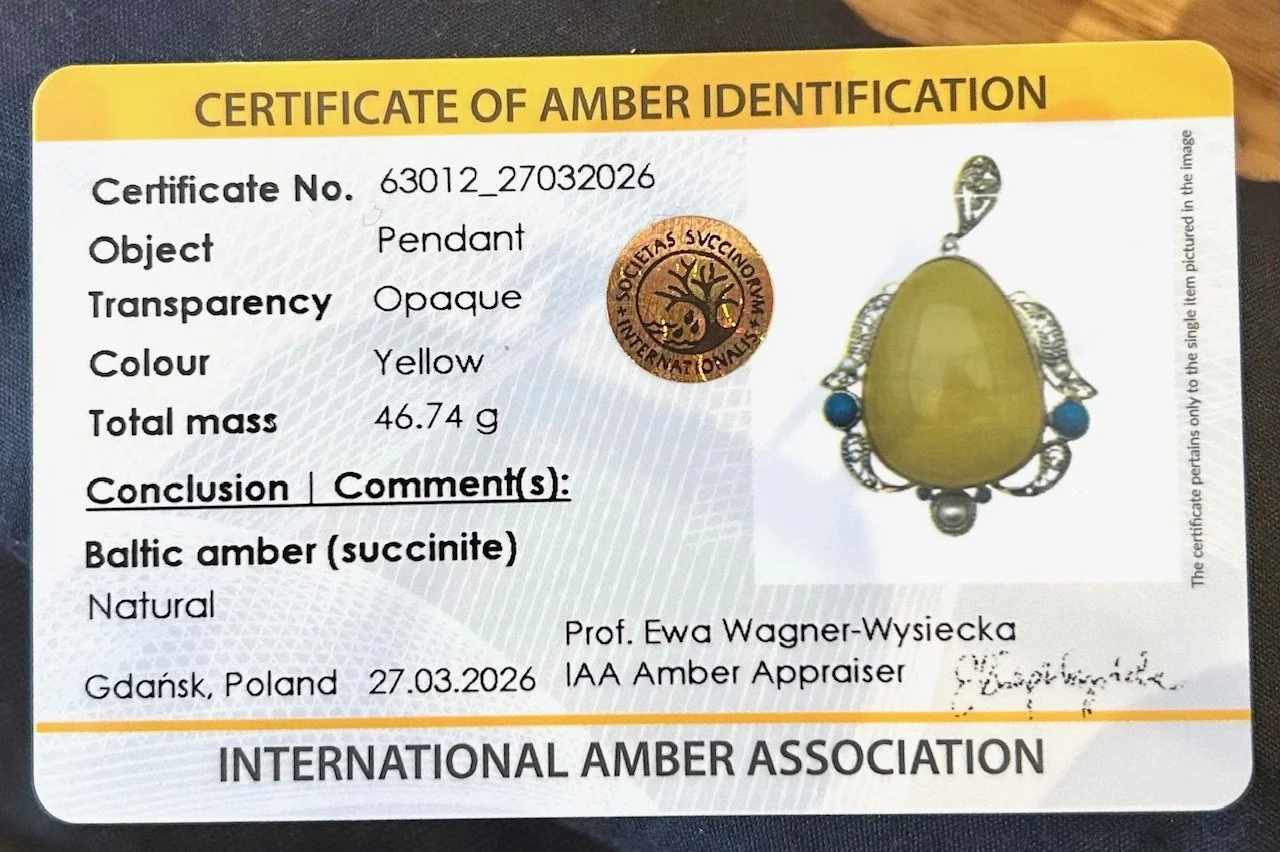
Each tested piece receives a certificate with a unique identification number, allowing its authenticity to be verified in the official database.
Understanding this process adds another layer of appreciation — amber is not only beautiful, but scientifically identifiable in a way as unique as a fingerprint.
Types of Baltic Amber: Understanding the International Amber Association (IAA) Classification
Baltic amber comes in different forms depending on how it has been processed or modified. To create a clear and consistent way of describing these differences, the International Amber Association (IAA) classifies Baltic amber into four main types: Natural, Treated, Reconstructed/Pressed, and Bonded Baltic Amber.
Understanding the IAA classification of Baltic amber can help you know exactly what you are buying—and better understand differences in appearance, craftsmanship, and price.
Natural Baltic Amber (Succinite)
Natural Baltic amber has undergone only mechanical processing, such as cutting, grinding, polishing, drilling, or turning. Its natural structure and properties have not been altered through additional treatment.
Natural amber can vary tremendously in color, clarity, texture, and inclusions. A polished piece can look very different from a raw one and still be classified as natural.
For many amber lovers, this purity is part of its particular appeal. Natural Baltic amber preserves the material as nature created it, with its original color, internal structure, textures, and inclusions left unaltered. Especially beautiful or unusual natural pieces can be highly valued by amber enthusiasts precisely because nothing has been done to create or enhance those characteristics.
Treated Baltic Amber (Succinite)
Treated Baltic amber is amber whose appearance, texture, or durability has been altered through human intervention.
According to the IAA classification, treatment may include processes involving heat, pressure, dyeing or other methods of changing color, filling cavities or cracks, and shaping.
Treatment can be used to enhance clarity, alter color, create decorative effects, or achieve a particular appearance. Treated Baltic amber is still Baltic amber—the important distinction is that its appearance or properties have been intentionally modified.
Reconstructed / Pressed Baltic Amber (Succinite)
Reconstructed, often called pressed amber, is made from pieces of Baltic amber that are combined under high temperature and high pressure, without additional components.
In simple terms, smaller pieces or fragments of amber can be consolidated to create a new, larger form. This technique is often encountered in cheaper beads and some other shapes.
A pressed amber bead may therefore be made entirely from Baltic amber, but it is not the same as a bead carved from one individual piece of amber.
That distinction can also affect price. A large bead carved from a single piece requires a sufficiently large piece of suitable raw amber, while reconstructed amber allows smaller pieces to be combined into a larger form.
Bonded Baltic Amber
Bonded Baltic amber consists of two or more pieces of amber permanently joined together, with only the amount of binding agent necessary to connect the pieces.
The individual components may be natural, treated, or reconstructed Baltic amber. Depending on the construction, bonded pieces may be described as doublets or triplets.
Why Does IAA Classification Matter?
The classification isn't simply about whether amber is “real.”
Two pieces of jewelry can both contain Baltic amber and yet have very different histories. One may have been cut and polished from a single natural piece. Another may have been heated to achieve a particular appearance. A third may have been reconstructed from smaller pieces.
These differences can influence appearance, rarity, craftsmanship, and price.
At Baltic Ambers Art, we have a strong preference for pieces that preserve the individuality and character of the amber itself. The artists we work with also tend to favor working with individual pieces of amber rather than reconstructed material. Pressed amber represents only a small part of what we offer.
But understanding classification isn't about telling you which type of amber you should love.
It's about knowing what you're looking at, understanding what you're paying for, and making your own informed choice.
Baltic Amber Collars for Cats and Dogs
Baltic amber collars have long been used as a holistic, non-chemical addition to flea and tick prevention routines.
The idea is based on one of amber's natural properties: its ability to develop an electrostatic charge through friction. As unpolished amber moves against a dog's fur, it creates friction and a mild static environment traditionally believed to make the coat less inviting for fleas and ticks.
The amber is intentionally left unpolished to maximize friction. With regular wear, the pieces gradually become smoother, so collars should generally be replaced yearly or when the amber has become noticeably polished.
Amber collars are best viewed as a complementary approach rather than a replacement for veterinarian-recommended flea and tick protection.